Photo: Diccy Alba Vega / Pexels
Photo: Natalia Msungu / Pexels
Video: Mixkit
Photo: Paul Prior via iNaturalist, CC BY
Video: Pexels
Habitat
Rainforest Canopy
Shady, leafy and humid
Climbers and leaf-litter dwellers whose enclosures copy forest: branches and plants to climb, gentler heat and more moisture in the air.
Habitat
Rainforest Canopy
Shady, leafy and humid
Climbers and leaf-litter dwellers whose enclosures copy forest: branches and plants to climb, gentler heat and more moisture in the air.
Food chain
What each resident here eats, from its care sheet. Tap a food to see who eats it.
Rainforest Canopy · resident 1 of 6
Crested gecko Correlophus ciliatus
A climbing gecko from New Caledonia that eats a powdered fruit diet. One adult needs a tall enclosure of at least 18 × 18 × 24 inches, 75–80°F at the warm end and 70–75°F...
- Home range
- New Caledonia [source]
- Warm end / cool
- 75–80°F / 70–75°F [source]
- Humidity
- 60–80% [source]
- Active
- Dusk and night 🌙
Fruit-based gecko dietFeeder insectsCrested gecko
A complete powdered crested gecko diet mixed with water; small dusted insects as an extra [source]
Rainforest Canopy · resident 2 of 6
Gargoyle gecko Rhacodactylus auriculatus
A mellow, very handleable climbing gecko from New Caledonia. One adult needs a tall 18 × 18 × 24 inch enclosure, 77–84°F in the warm zone, 72–74°F in the cool zone, 50–70% humidity with...
- Home range
- New Caledonia [source]
- Warm end / cool
- 77–84°F / 72–74°F [source]
- Humidity
- 50–70% [source]
- Active
- Dusk and night 🌙
Fruit-based gecko dietFeeder insectsGargoyle gecko
A complete powdered crested gecko diet, feeder insects twice a week, fruit as an occasional treat [source]
Rainforest Canopy · resident 3 of 6
Mourning gecko Lepidodactylus lugubris
A tiny 3–4 inch climbing gecko from the South Pacific that lives in colonies. A group needs at least a 12 × 12 × 18 inch enclosure, 75–80°F at the warm end, 70–72°F at...
- Home range
- South Pacific islands, Central and South America, Hawaii [source]
- Warm end / cool
- 75–80°F / 70–72°F [source]
- Humidity
- 60–80% [source]
- Active
- Dusk and night 🌙
Fruit-based gecko dietFeeder insectsMourning gecko
A fruit-based crested gecko diet plus small dusted insects [source]
Rainforest Canopy · resident 4 of 6
Jackson's chameleon Trioceros jacksonii
A horned chameleon from Kenya and Tanzania, harder to keep than a veiled chameleon. One adult needs a tall 24 × 24 × 48 inch screen enclosure, an 80–85°F basking spot, 65–75°F elsewhere, 50–80%...
- Home range
- Kenya and Tanzania [source]
- Basking / cool
- 80–85°F / 65–75°F [source]
- Humidity
- 50–80% [source]
- Active
- By day ☀️
Feeder insectsJackson's chameleon
Insects such as crickets, black soldier flies, hornworms, silkworms and roach nymphs [source]
Rainforest Canopy · resident 5 of 6
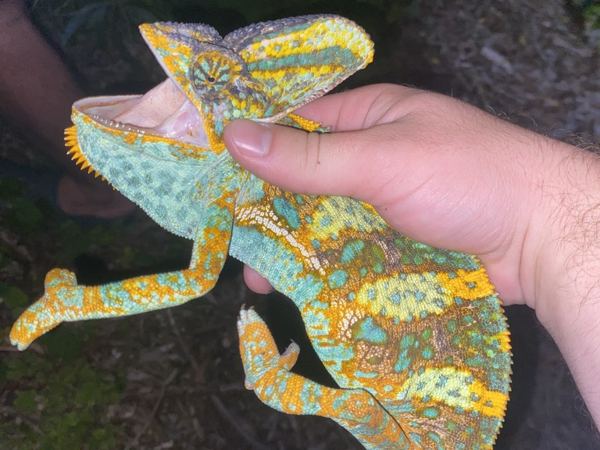
Veiled chameleon Chamaeleo calyptratus
A large chameleon from Yemen and southern Saudi Arabia. One adult needs at least a 24 × 24 × 48 inch enclosure, an 85°F basking spot, 72–78°F elsewhere, 40–50% humidity by day and 80–100%...
- Home range
- Yemen and southern Saudi Arabia [source]
- Basking / cool
- 85°F / 72–78°F [source]
- Humidity
- 40–50% [source]
- Active
- By day ☀️
Feeder insectsVeiled chameleon
Dusted feeder insects [source]
Rainforest Canopy · resident 6 of 6
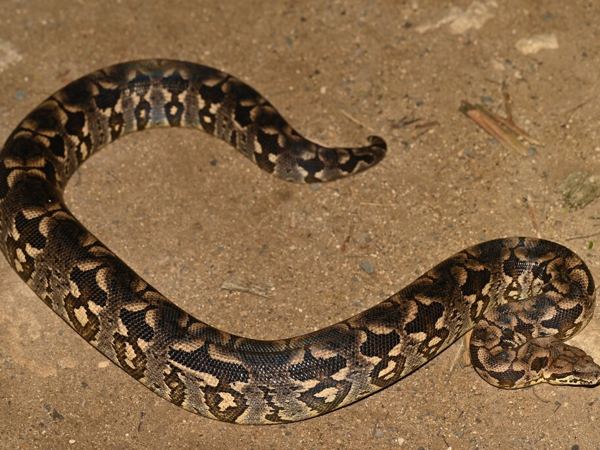
Dumeril's boa Acrantophis dumerili
A heavy, slow-moving boa from the spiny forests of southwestern Madagascar, growing to about six feet. An adult needs a 6 × 3 × 3 foot enclosure, an 85–90°F basking spot, a 72–78°F cool...
- Home range
- Southwestern Madagascar [source]
- Basking / cool
- 85–90°F / 72–78°F [source]
- Humidity
- 60–70% [source]
- Active
- Dusk and night 🌙
Rodents & whole preyDumeril's boa
Whole prey such as mice, rats, gerbils, chicks or quail [source]
Rainforest Canopy residents
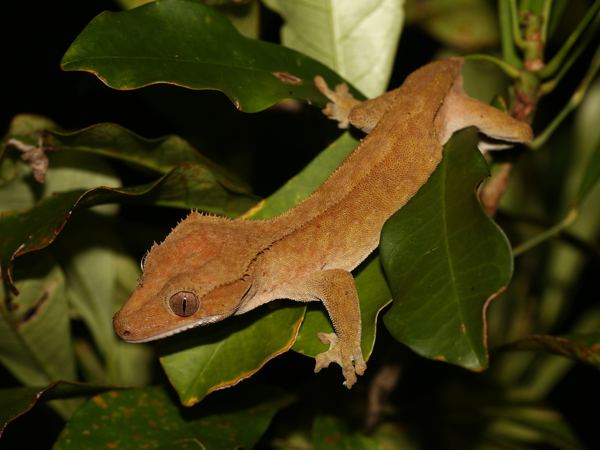 ForestBeginner
01
Crested geckoCorrelophus ciliatus
7–9 in15–20 yearsPowdered crested gecko diet plus some insects
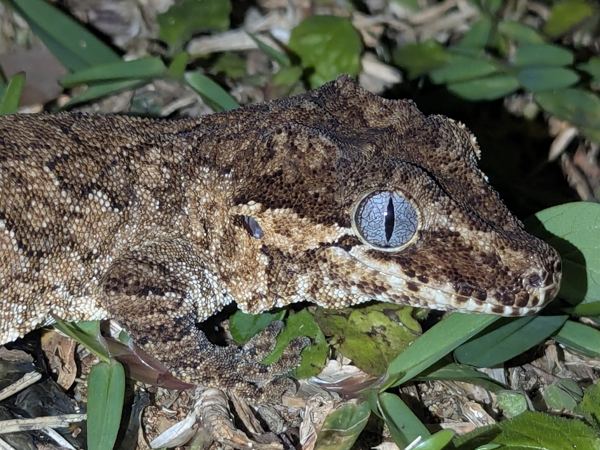 ForestBeginner
02
Gargoyle geckoRhacodactylus auriculatus
7–9 in15–20 yearsCrested gecko diet plus insects
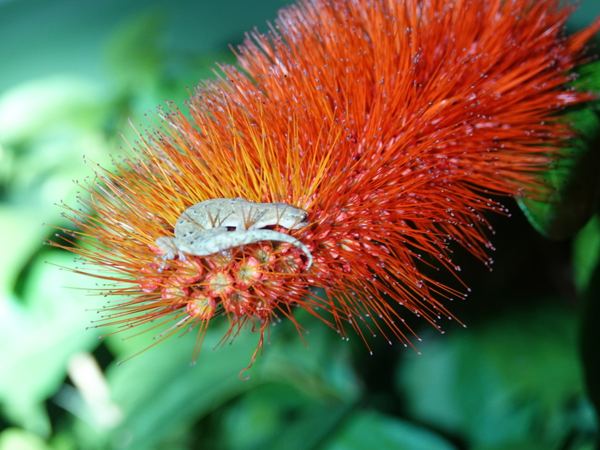 ForestBeginner
03
Mourning geckoLepidodactylus lugubris
3–4 in10–15 yearsCrested gecko diet plus small insects
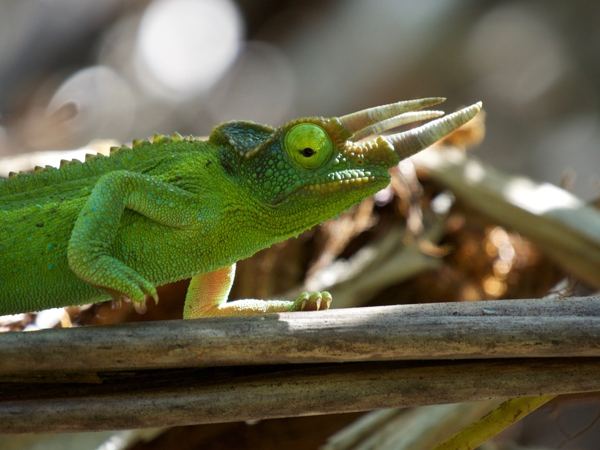 ForestAdvanced
04
Jackson's chameleonTrioceros jacksonii
9–13 in5–10 yearsInsects
 Forest
05
Veiled chameleonChamaeleo calyptratus
Up to about 22 in6–8 years (females shorter)Insects
 ForestIntermediate
06
Dumeril's boaAcrantophis dumerili
5–7 ft15–20+ yearsWhole prey (rodents, birds)
Other habitats: Desert Dunes · Grassland & Savanna