Short answer: A small, hardy tortoise from Central Asia that can live 50 years or more. One adult indoors needs about 7 × 3.5 feet of floor space, a 95°F basking spot, a 75–85°F cool zone, 70–75°F at night, strong UVB, and leafy greens, grasses and weeds every day.
Every number below links to the care source it came from. No AI-written care advice.
- Habitat
- Desert Dunes
- Home range
- Kazakhstan, Uzbekistan, Turkmenistan, Kyrgyzstan, Afghanistan and northeastern Iran
- Adult size
- 5–10 in
- Lifespan
- Up to 50 years or more
- Diet
- Herbivore: greens, grasses, weeds
- Active
- Daytime
Setup at a glance
| Enclosure (adult minimum) | 84 × 42 × 24 in. About 24.5 square feet of floor space for one adult indoors; floor space matters more than height. [source] |
|---|---|
| Basking spot | 95°F [source] |
| Cool end | 75–85°F [source] |
| Night | 70–75°F [source] |
| Humidity | 40–75%. Lower by day and higher at night (the range given for juveniles) [source] |
| UVB (recommended) | An Arcadia T5 HO 12% or ReptiSun 10.0 tube about 1/3 the enclosure length, on the warm side; 14–16 in above its back through mesh, 17–20 in without; aim for UVI 3.0–4.0 at the basking spot. [source] |
| Heat | 50 W halogen heat lamps: at least one for juveniles, two for adults. [source] |
| Substrate | A well-drained mix (40% topsoil, 40% play sand, 20% clay) 4 in deep for juveniles, 6 in for adults. [source] |
| Adult size · lifespan | 5–10 in · Up to 50 years or more |
What to feed, and how often
Leafy greens, grasses and edible weeds; flowers as treats; fruit and insects only very rarely. [source]
| Young, growing tortoise | As much as it will eat, daily |
|---|---|
| Near adult size | About the size of its shell, daily |
Supplements: A multivitamin sprinkled on food, plus a cuttlebone.
When is the next meal due?Feeding schedule →More Russian tortoises
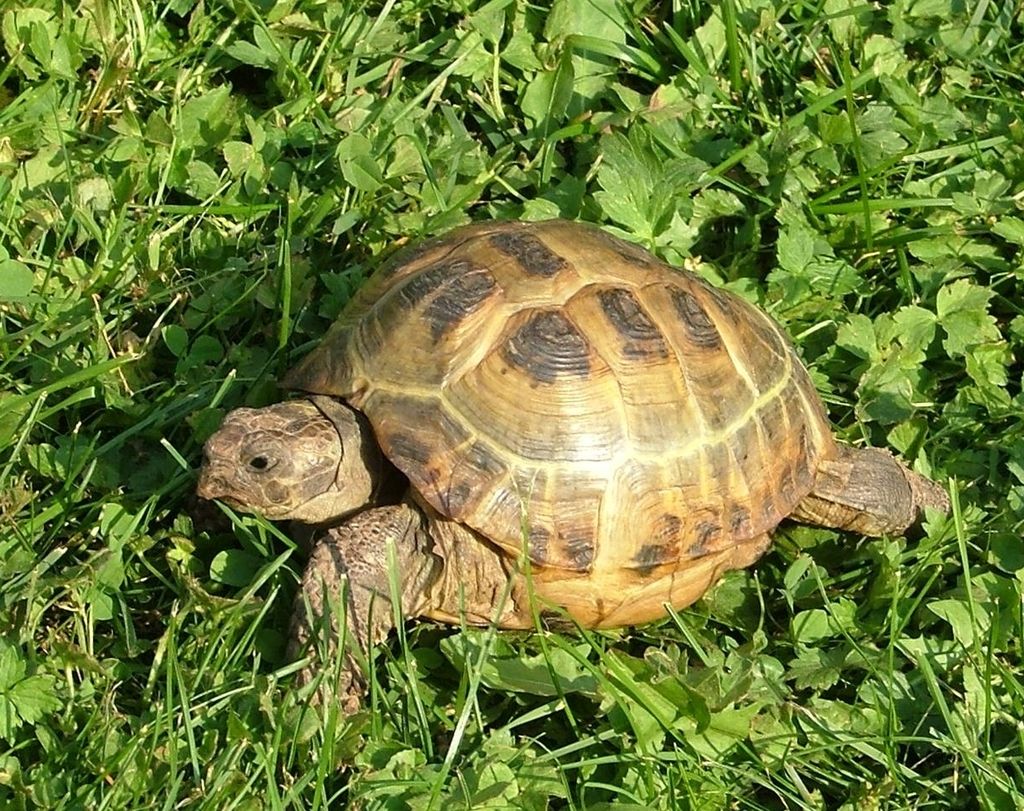
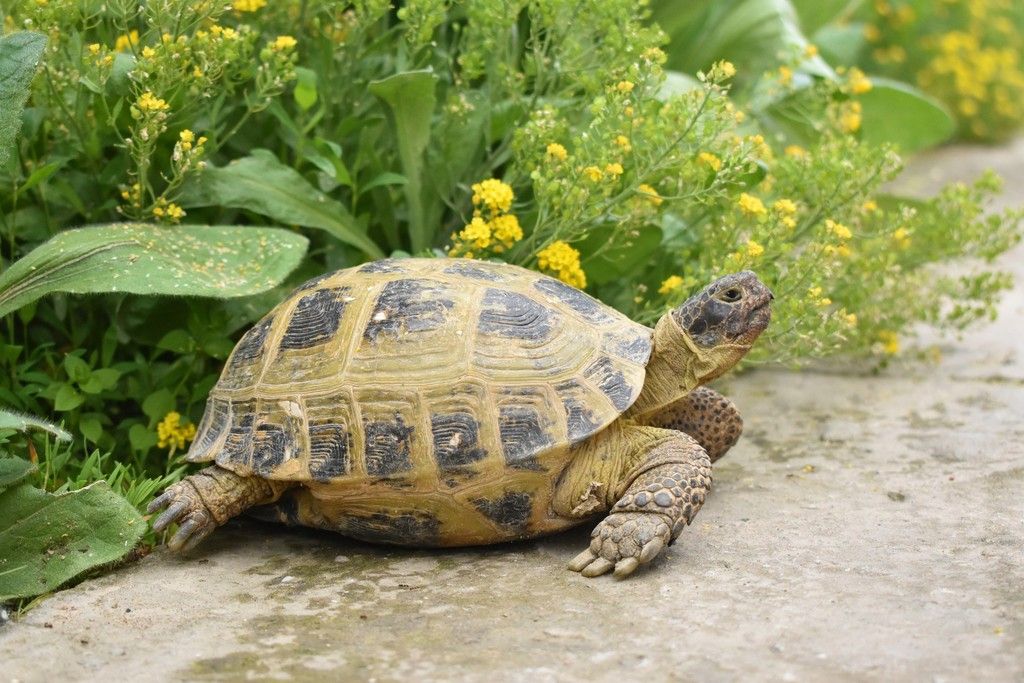
Russian tortoise FAQ
What size enclosure does a russian tortoise need?
At least 84 × 42 × 24 inches (length × depth × height) for one adult. About 24.5 square feet of floor space for one adult indoors; floor space matters more than height. [source]
What temperature does a russian tortoise need?
A basking spot of 95°F and 75–85°F at the cool end. At night, 70–75°F. [source]
What humidity does a russian tortoise need?
40–75%. Lower by day and higher at night (the range given for juveniles). [source]
Does a russian tortoise need UVB?
UVB is recommended. An Arcadia T5 HO 12% or ReptiSun 10.0 tube about 1/3 the enclosure length, on the warm side (14–16 in above its back through mesh, 17–20 in without). Aim for a UVI of 3.0–4.0 where it basks. [source]
What do Russian tortoises eat?
Leafy greens, grasses and edible weeds; flowers as treats; fruit and insects only very rarely. Supplements: A multivitamin sprinkled on food, plus a cuttlebone. [source]
How often should I feed a russian tortoise?
Young, growing tortoise: As much as it will eat, daily.Near adult size: About the size of its shell, daily. [source]
How big do Russian tortoises get, and how long do they live?
Adults reach 5–10 in and live Up to 50 years or more with good care.
Where do Russian tortoises come from?
Kazakhstan, Uzbekistan, Turkmenistan, Kyrgyzstan, Afghanistan and northeastern Iran. They are most active: daytime. [source]
Neighbors in the Desert Dunes
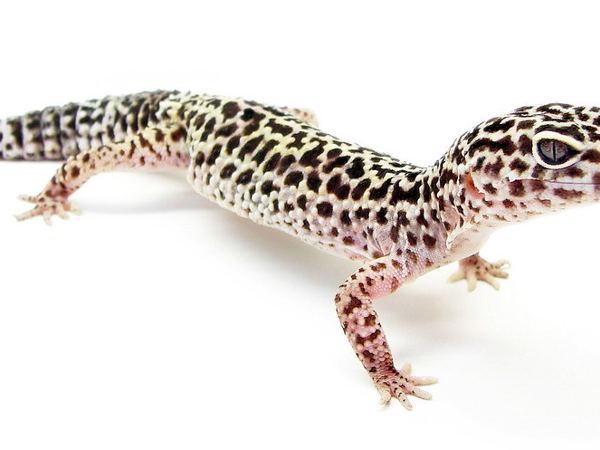 Desert DunesBeginner
Leopard geckoEublepharis macularius
7–10 in15–20+ yearsInsects
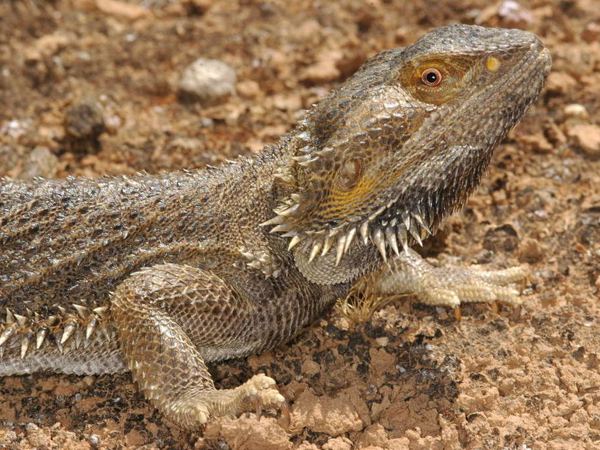 Desert DunesIntermediate
Bearded dragonPogona vitticeps
18–24 in10–15 years (20–25 possible)Insects and vegetables
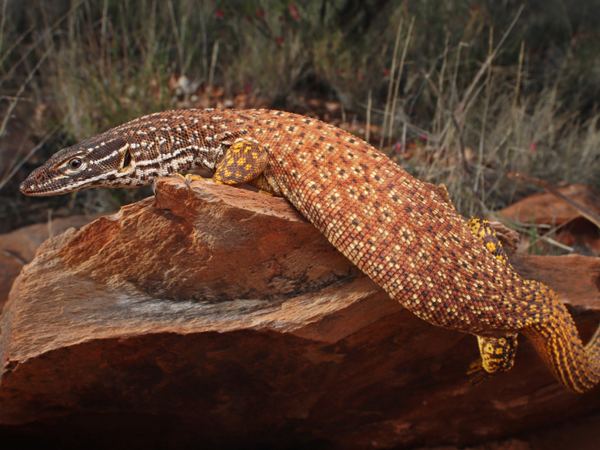 Desert DunesIntermediate
Ackie monitorVaranus acanthurus
About 24 in15+ yearsInsects, some lizard prey
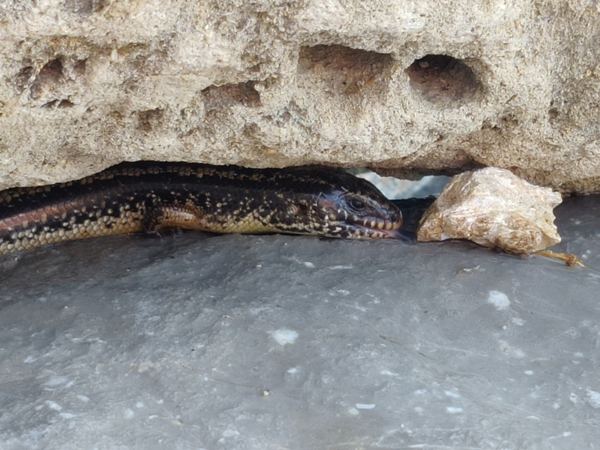 Desert DunesBeginner
Ocellated skinkChalcides ocellatus
7–9 in10–20 yearsInsects, some greens
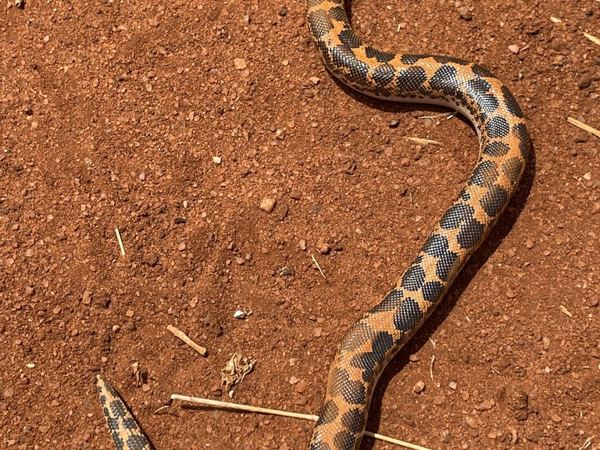 Desert Dunes
Kenyan sand boaEryx colubrinus
12–24 in (some females to 36 in)Up to 30 yearsRodents
Sources
General husbandry information, not veterinary advice. If your animal is losing weight or seems unwell, see a reptile vet (find one through ARAV). Updated November 9, 2026.