Photo: jdgromov / Pexels
Photo: Diccy Alba Vega / Pexels
Video: Pexels
Photo: Stephanie Dolrenry via iNaturalist, CC BY-SA
Photo: Connor Margetts via iNaturalist, CC0
Video: Pexels
Photo: Kseniia Marianna Prondzynska via iNaturalist, CC BY
Video: Pexels
Habitat
Desert Dunes
Hot, bright and dry
Residents whose enclosures copy hot, dry country: a very hot basking spot, a cooler end to retreat to and low humidity, with a humid hide where the care sheet calls for one.
Habitat
Desert Dunes
Hot, bright and dry
Residents whose enclosures copy hot, dry country: a very hot basking spot, a cooler end to retreat to and low humidity, with a humid hide where the care sheet calls for one.
Food chain
What each resident here eats, from its care sheet. Tap a food to see who eats it.
Desert Dunes · resident 1 of 6
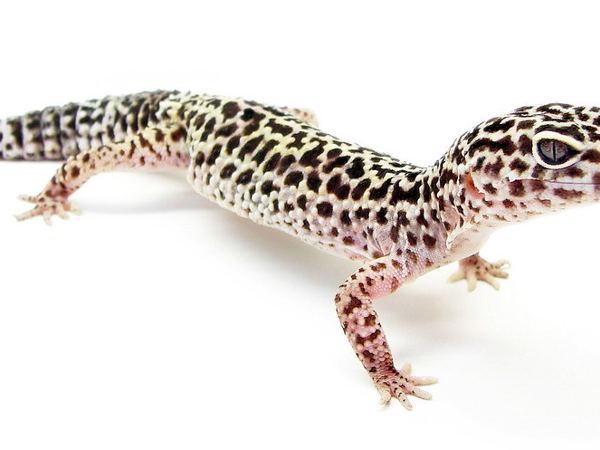
Leopard gecko Eublepharis macularius
A calm, ground-dwelling gecko from dry grassland and scrub, active at dawn and dusk. One adult needs at least a 36 × 18 × 18 inch enclosure, a 90–95°F basking spot, a 72–77°F cool...
- Home range
- Semi-desert and arid grassland [source]
- Basking / cool
- 90–95°F / 72–77°F [source]
- Humidity
- 30–40% [source]
- Active
- Dusk and night 🌙
Feeder insectsLeopard gecko
Crickets, dubia roaches, black soldier fly larvae, mealworms, silkworms; waxworms and hornworms only as treats [source]
Desert Dunes · resident 2 of 6
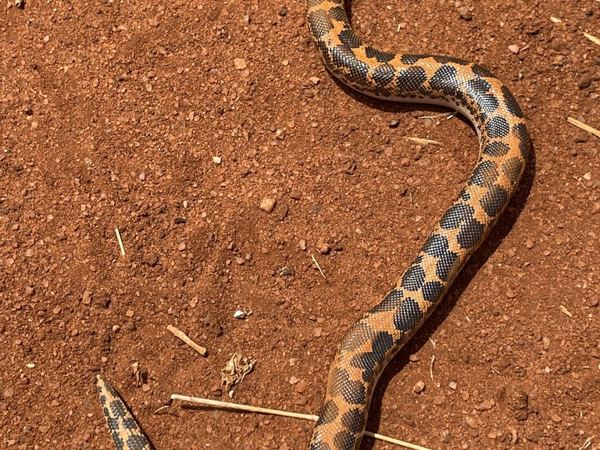
Kenyan sand boa Eryx colubrinus
A small, docile, burrowing boa from the dry parts of East Africa that rarely bites. One adult needs at least a 24 × 12 × 12 inch enclosure with 3–4 inches of sand or...
- Home range
- Arid and semi-arid East Africa [source]
- Basking / cool
- 93–95°F / 78–83°F [source]
- Humidity
- Keep it mostly dry, with a humid hide on the cool side [source]
- Active
- Dusk and night 🌙
Rodents & whole preyKenyan sand boa
Frozen-thawed mice or other small prey about as wide as the snake's widest point [source]
Desert Dunes · resident 3 of 6
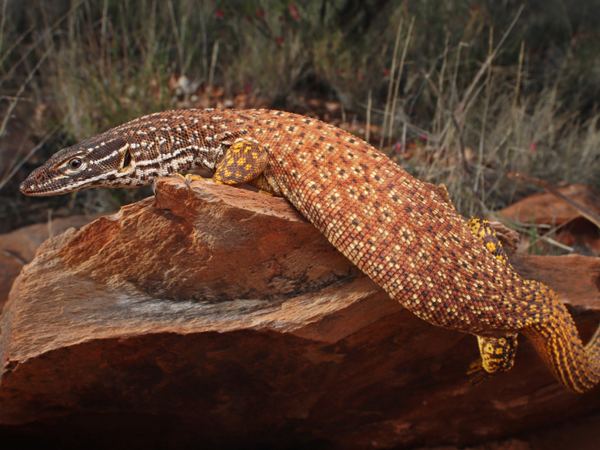
Ackie monitor Varanus acanthurus
A small monitor lizard from northern Australia that digs deep burrows and basks very hot. One adult needs a 5 × 2.5 × 4 foot enclosure with 12–18 inches of diggable substrate, a 158–172°F...
- Home range
- Northern Australia [source]
- Basking / cool
- 158–172°F / 75–82°F [source]
- Humidity
- 20–50% [source]
- Active
- By day ☀️
Feeder insectsAckie monitor
Insects (dubia roaches, crickets, superworms, black soldier fly larvae), with occasional quail eggs or young mice [source]
Desert Dunes · resident 4 of 6
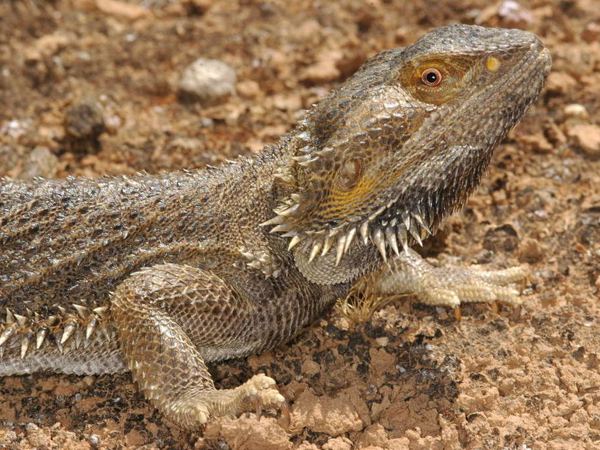
Bearded dragon Pogona vitticeps
A sun-loving lizard from inland Australia. One adult needs an enclosure of at least 6 × 2 × 2 feet, a 105–115°F basking surface, a 70–85°F cool end, strong T5 HO UVB, and greens...
- Home range
- Eastern and central Australia [source]
- Basking / cool
- 105–115°F / 70–85°F [source]
- Humidity
- 30–60% [source]
- Active
- By day ☀️
Feeder insectsGreens & vegBearded dragon
Dusted insects (dubia roaches, black soldier fly larvae, crickets) plus leafy greens and vegetables daily [source]
Desert Dunes · resident 5 of 6
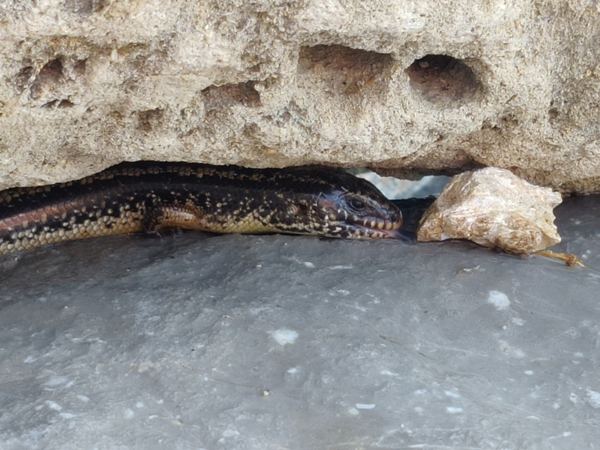
Ocellated skink Chalcides ocellatus
A small, curious, half-burrowing skink from around the Mediterranean. One adult needs a 36 × 18 × 12 inch enclosure, a 95–100°F basking spot, a 72–78°F cool side, 40–60% humidity, UVB reaching UVI 3–4,...
- Home range
- The Mediterranean coast, western Africa and the Arabian peninsula [source]
- Basking / cool
- 95–100°F / 72–78°F [source]
- Humidity
- 40–60% [source]
- Active
- By day ☀️
Feeder insectsGreens & vegOcellated skink
Insects (crickets, dubia roaches, black soldier fly larvae, hornworms) and greens such as kale and dandelion [source]
Desert Dunes · resident 6 of 6
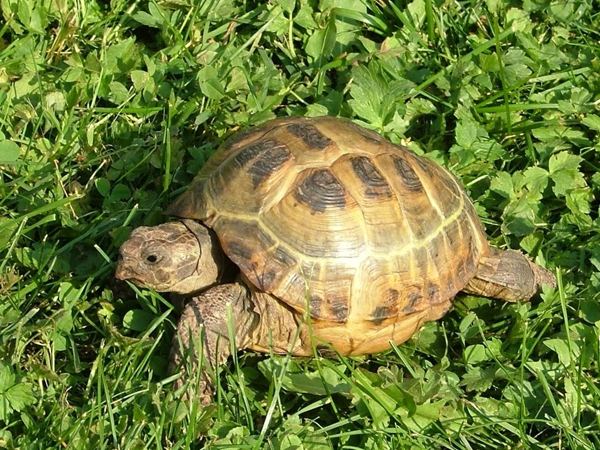
Russian tortoise Testudo horsfieldii
A small, hardy tortoise from Central Asia that can live 50 years or more. One adult indoors needs about 7 × 3.5 feet of floor space, a 95°F basking spot, a 75–85°F cool zone,...
- Home range
- Kazakhstan, Uzbekistan, Turkmenistan, Kyrgyzstan, Afghanistan and northeastern Iran [source]
- Basking / cool
- 95°F / 75–85°F [source]
- Humidity
- 40–75% [source]
- Active
- By day ☀️
Greens & vegRussian tortoise
Leafy greens, grasses and edible weeds; flowers as treats; fruit and insects only very rarely [source]
Desert Dunes residents
 DesertBeginner
01
Leopard geckoEublepharis macularius
7–10 in15–20+ yearsInsects
 Desert
02
Kenyan sand boaEryx colubrinus
12–24 in (some females to 36 in)Up to 30 yearsRodents
 DesertIntermediate
03
Ackie monitorVaranus acanthurus
About 24 in15+ yearsInsects, some lizard prey
 DesertIntermediate
04
Bearded dragonPogona vitticeps
18–24 in10–15 years (20–25 possible)Insects and vegetables
 DesertBeginner
05
Ocellated skinkChalcides ocellatus
7–9 in10–20 yearsInsects, some greens
 Desert
06
Russian tortoiseTestudo horsfieldii
5–10 inUp to 50 years or moreHerbivore: greens, grasses, weeds
Other habitats: Rainforest Canopy · Grassland & Savanna